When organizations hire, there are a few questions that naturally come first.
Does this person have the right experience?
Do they have the skills?
Have they done this kind of work before?
Those are important questions. They should be part of almost every hiring decision.
But there is another question that can be just as valuable:
How naturally does this work fit the way this person approaches work?
Because being capable of doing a job and being naturally suited to the day-to-day demands of that job are not always the same thing.
Qualified Does Not Always Mean Naturally Aligned
A résumé can tell us where someone has worked.
An interview can help us understand their experience, communication style, and perspective.
Skills can tell us what someone knows how to do.
But a job is more than a list of qualifications.
Every role asks something different from a person every day.
Some jobs require constant interaction with people.
Others require long stretches of independent focus.
Some demand quick decisions with incomplete information.
Others depend on precision, consistency, and careful analysis.
Some require someone to continually create new ideas.
Others need someone who enjoys turning those ideas into repeatable processes.
A person may have every required skill and still find themselves working against their natural approach day after day.
They can do the job.
That does not necessarily mean the work comes naturally.
Think About What the Role Actually Requires
Job descriptions often focus heavily on responsibilities and qualifications.
Five years of experience.
Bachelor’s degree preferred.
Experience with a certain system.
Strong communication skills.
Ability to manage multiple priorities.
Those things may all matter.
But they do not always tell us what the experience of doing the job is actually like.
Consider two roles that both require “strong communication skills.”
One may involve building relationships all day, meeting new people, presenting ideas, and influencing decisions.
The other may involve gathering information, communicating findings clearly, and occasionally presenting a detailed recommendation.
Both require communication.
But they ask very different things from the person doing the work.
The same is true for leadership, organization, problem-solving, creativity, decision-making, and almost every other broad requirement we put into a job description.
Understanding role fit requires looking beyond the label and asking what the work actually demands.
This Is Where Talent Wiring Adds Context
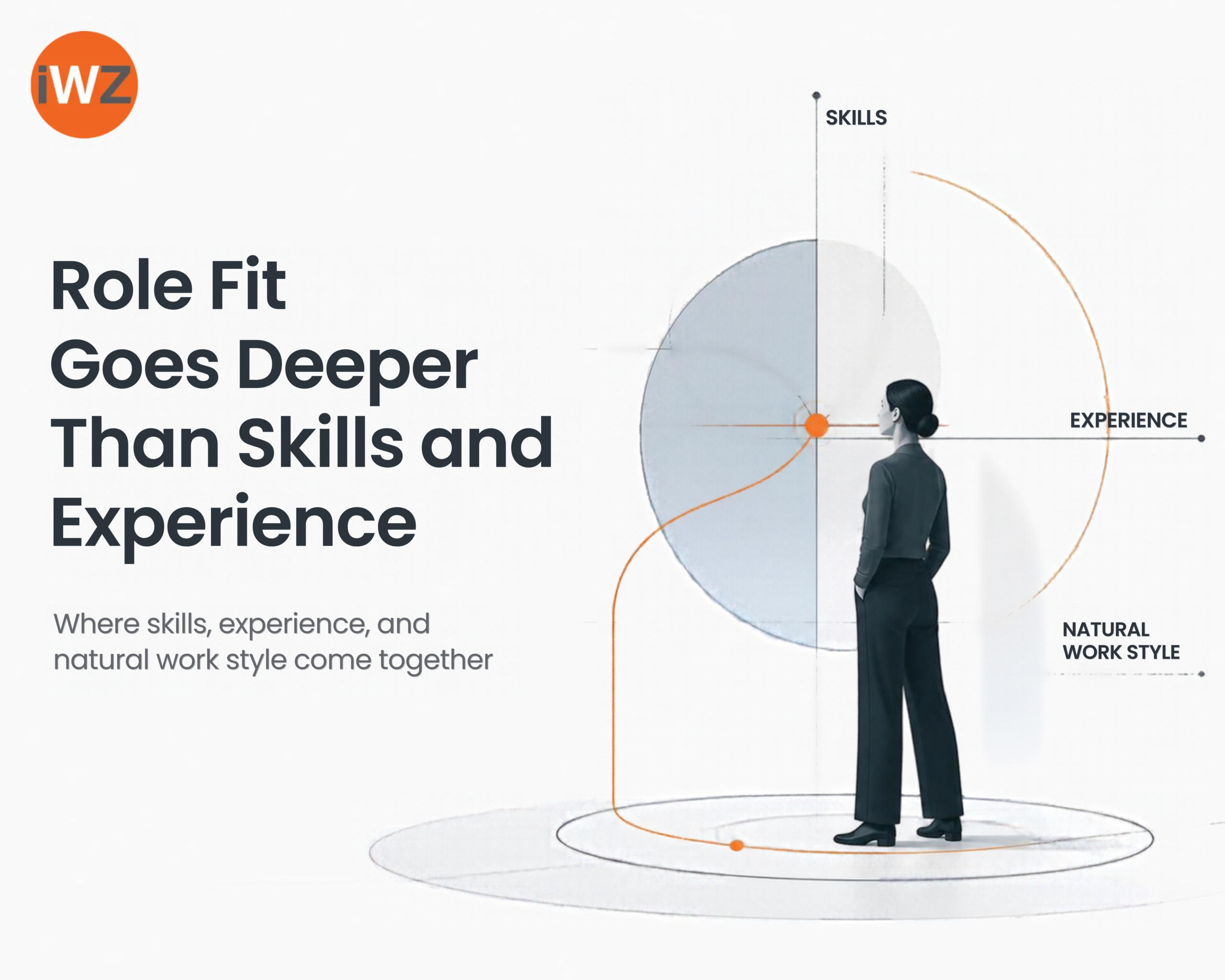
Talent Wiring™ helps organizations better understand how people naturally approach work.
How do they process information?
How do they solve problems?
How much interaction with people naturally energizes the work?
Do they tend to focus on the big picture or naturally dig into details?
How important is understanding the purpose behind something before moving forward?
Do they naturally enjoy creating structure, working within structure, or operating with more flexibility?
Those patterns do not tell us whether someone has the technical knowledge to perform a job.
They tell us something different.
They help provide context around how naturally the work itself may fit the person.
That is why Talent Wiring should not replace skills, experience, interviews, or human judgment.
It should sit alongside them.
Each answers a different question.
Capability and Fit Are Both Important
It would be a mistake to suggest that natural fit is all that matters.
Someone may be naturally wired for the demands of a role but still lack the knowledge, training, or experience required to perform it successfully.
Those gaps matter.
But the reverse deserves attention too.
Someone can be highly experienced and completely capable while spending enormous energy adapting themselves to work that does not come naturally.
They may still perform.
They may even perform very well.
But over time, constant friction between the person and the work can affect engagement, development, satisfaction, and whether the role continues to make sense.
That is why a better hiring conversation is not simply:
Can they do this job?
It can also include:
What will doing this job ask of them every day?
And:
How naturally does that align with how they tend to work?
Those questions create a fuller picture.
Role Fit Matters After the Hire Too
Understanding role fit is not only useful when someone is applying for a job.
People change responsibilities.
Teams grow.
Employees take on new projects.
Leaders consider promotions.
Organizations restructure.
Someone who has been highly successful in one role may struggle after being promoted into work that requires something very different from them.
A great individual contributor does not automatically become a great people leader.
A talented relationship builder may not enjoy a role that suddenly becomes heavily process-driven.
Someone who thrives solving complex problems may become frustrated when most of their time shifts toward repetitive execution.
None of that means the person failed.
Sometimes the work simply changed.
Understanding Talent Wiring can help organizations have better conversations about those changes before assuming someone has suddenly lost motivation or ability.
Sometimes Development Means Building Skills
Other times, it means understanding where someone naturally contributes best.
Both matter.
There will always be parts of a job that require adaptation. No role perfectly matches every preference or natural strength.
The goal should not be to create a workplace where people only do what feels easy.
The goal is to understand enough about the person and the role to make more informed decisions about where someone can contribute, where development may be needed, and where persistent friction may exist.
That creates better conversations around hiring.
It creates better conversations around career development.
And it gives leaders more context when someone who looks qualified on paper is struggling with the reality of the work.
Look Beyond the Checklist
Skills matter.
Experience matters.
Education, training, interviews, references, and judgment all matter.
But people are more complex than a checklist of qualifications.
And jobs are more complex than a list of responsibilities.
Talent Wiring™ adds another perspective by helping organizations understand how people naturally approach the work itself.
Because sometimes the most important question is not simply whether someone can do the job.
It is understanding how the job and the person may work together once they are actually doing it.
Better role fit starts with understanding both.