For a long time, evaluating people at work has followed a familiar pattern.
Resumes. Interviews. Performance reviews. Manager feedback.
Each of these tools was designed to answer a simple question:
“How good is this person at their job?”
And for years, that approach has been “good enough.”
But something is starting to shift.
Quietly, but noticeably.
The way we evaluate people at work is beginning to change.
The Old Model Was Built for a Slower World
Traditional evaluation methods were designed for stability.
Roles were more defined. Expectations changed less frequently. Career paths were more predictable.
In that environment, looking at past experience and observed performance made sense.
It gave leaders a reasonable signal of future success.
But today’s work environment looks very different.
Work Has Outgrown the Old Signals
Work is now:
- faster
- more fluid
- more collaborative
- more dependent on decision-making in real time
Roles evolve quickly. Teams shift often. Expectations are less clearly defined.
And in that environment, traditional evaluation methods start to lose accuracy.
Because they’re still focused on:
What someone has done…
Instead of:
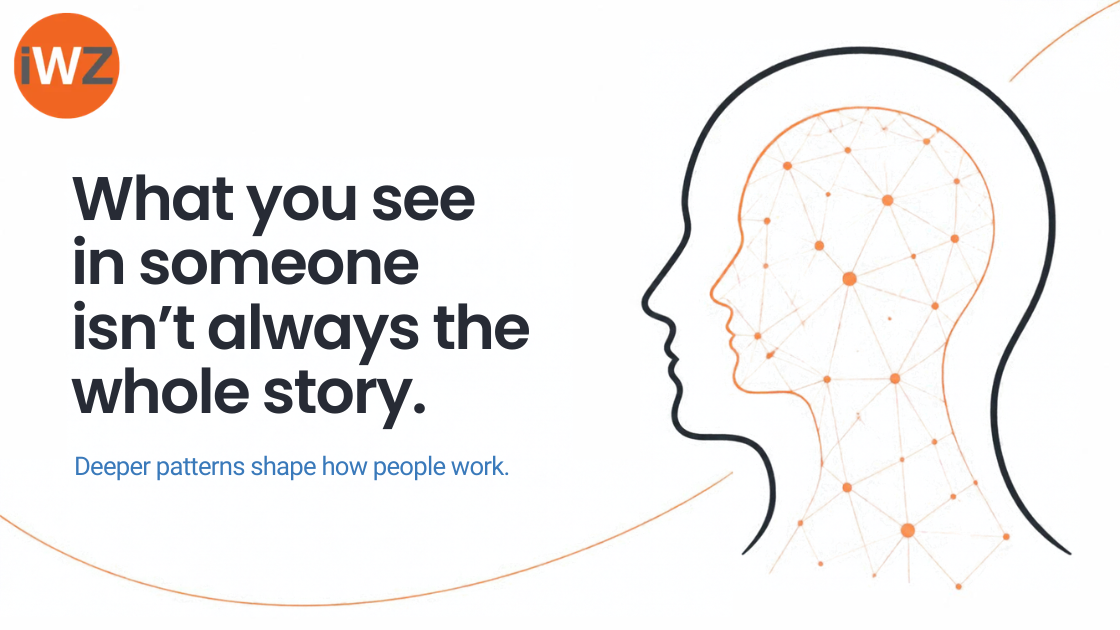
How someone actually operates.
AI Is Accelerating the Shift
AI isn’t just changing how work gets done.
It’s changing how performance shows up.
Two employees can now:
- produce the same output
- use the same tools
- complete the same tasks
But get there in completely different ways.
One may create clarity and momentum.
Another may create rework, confusion, or inconsistency.
From the outside, the output can look similar.
But the underlying performance is not.
And that’s becoming harder to ignore.
The New Question Leaders Are Facing
As work becomes more dynamic, leaders are starting to ask a different question.
Not just:
“Did this person get the job done?”
But:
“How did they operate while doing it?”
- How did they make decisions?
- How did they handle ambiguity?
- How did they interact with others?
- How sustainable is their performance over time?
That shift — from outcome to operating style — is a big one.
Why This Matters Now
When evaluation methods lag behind how work actually happens, organizations run into problems:
- misaligned promotions
- inconsistent performance
- confusing feedback loops
- hiring decisions that don’t hold up
Not because people lack talent.
Because the system isn’t measuring the right things anymore.
Where This Is Headed
The next phase of workforce evaluation will go deeper.
It will move beyond surface-level signals and toward understanding:
- how people think
- how they make decisions
- how they naturally create value
Not just what they’ve accomplished.
But how they operate inside real work environments.
Where Talent Wiring Fits In
This is exactly where Talent Wiring becomes critical.
Because if the future of work depends more on how people operate, then leaders need a clearer way to see it.
Talent Wiring provides that visibility.
It helps organizations understand the patterns behind performance — not just the outcomes.
And as work continues to evolve, that kind of clarity will only become more important.
The Takeaway
The way we evaluate people at work isn’t broken.
But it is becoming outdated.
And the organizations that recognize that early will have a major advantage over the ones still relying on signals that no longer tell the full story.
Because the future of work won’t just be faster.
It will be more transparent.
If the way we evaluate talent is changing, the question becomes: are your systems changing with it? That’s exactly what we’re focused on at iWorkZone. Click here to see for yourself.