By the time a candidate walks into an interview, a surprising amount of the hiring decision has already been shaped.
Not because the candidate has been chosen. Because the organization has already decided what it thinks the role requires.
That sounds obvious, but this is where hiring can get fuzzy fast.
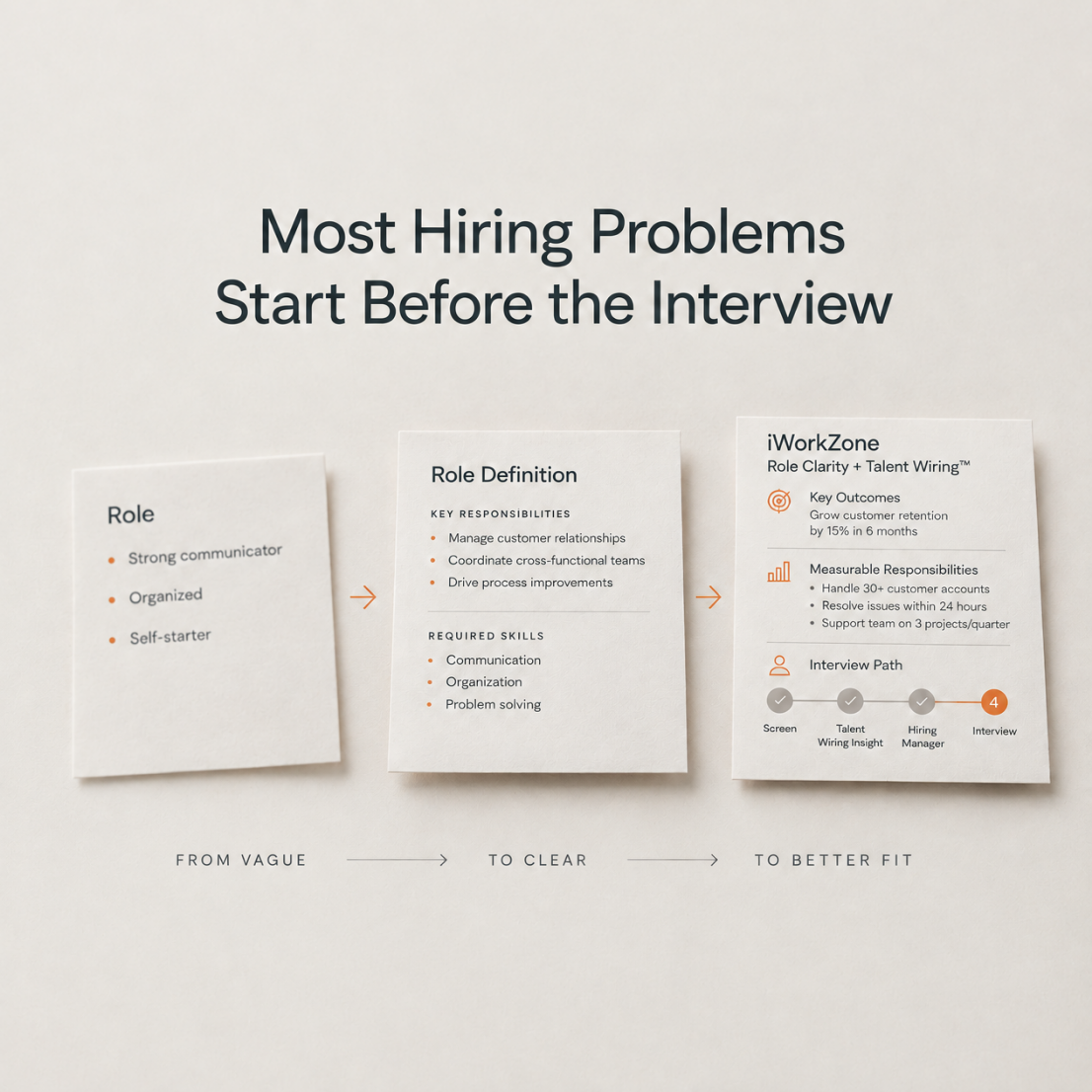
Job descriptions are filled with phrases like:
strong communication skills
detail-oriented
self-starter
team player
organized
adaptable
None of those are bad qualities. The problem is that they can mean almost anything until they are connected to the actual work.
If the role is vague, the interview can only be precise by accident.
“Strong communication” is not a job requirement until you define it
Imagine two positions that both list “strong communication skills.”
In the first role, the person spends much of the day talking with customers, building relationships, asking questions, and influencing decisions.
In the second, the person spends hours gathering information, working independently through the details, and eventually explaining a recommendation to a small group.
Both jobs require communication.
They do not require the same kind of work.
Yet if the hiring team stops at the phrase “strong communicator,” candidates may be evaluated against completely different expectations depending on who is conducting the interview.
One interviewer may be impressed by energy and conversation.
Another may be looking for someone who can explain a complicated idea clearly.
Another may care most about listening.
All three could reasonably say they are evaluating communication.
That is the problem.
Before evaluating the person, we need a clearer picture of what the role is actually asking them to do.
Being organized can hide the same problem
Jeff Yates uses another distinction when working through Talent Wiring that illustrates this well.
Someone may be extremely good at maintaining an existing process. They keep the checklist moving, stay organized, follow the steps, and make sure important details do not get missed.
Then we promote them or change their responsibilities and ask them to build a process from scratch.
That is different work.
Within iWorkZone, Coordinator describes a behavioral pattern connected with organization and managing process. Investigative wiring gives us another perspective on working through the “how,” developing steps, and building solutions.
One does not tell us that someone can or cannot do the other.
The distinction simply gives us a better question to ask.
Are we hiring someone to maintain a process?
Improve one?
Or create one?
Those responsibilities can easily appear under the same job title, but the day-to-day work is not identical.
Vague roles create vague interviews
When the work has not been defined clearly, interview questions often become broad too.
“Tell me about a time you showed leadership.”
“How do you handle change?”
“Would you describe yourself as detail-oriented?”
The candidate answers. The interviewers interpret the answers through their own understanding of what the job requires. Then everyone compares notes.
That process can still produce a good hire.
But it also leaves a lot of room for presentation, familiarity, chemistry, and individual assumptions to carry more weight than anyone intended.
The person who communicates most confidently may feel like the strongest candidate even when confidence is not especially important to the recurring work.
Someone with exactly the experience the team needs may be discounted because their style does not resemble the hiring manager’s.
Or the company may hire someone who is fully capable of doing the job, only to discover later that the role asks them to work against their natural preferences every day.
The interview did not necessarily fail.
The organization may have entered the interview without defining the work precisely enough.
Define the work before evaluating the person
This is one of the places Talent Wiring™ can add useful context.
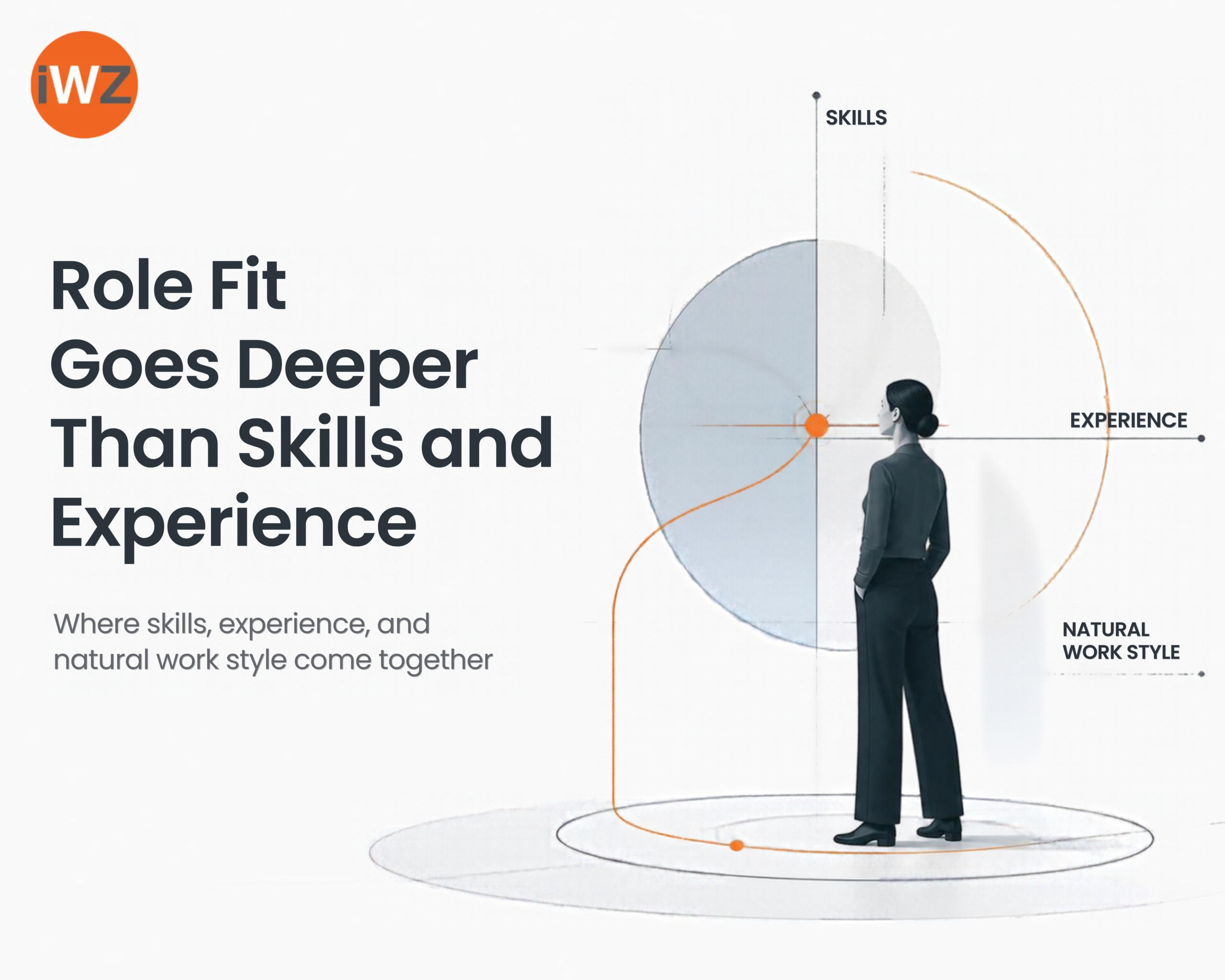
Skills still matter.
Experience still matters.
Interviews still matter.
But those tools become more useful when the organization is clear about what it is actually looking for.
Instead of beginning with broad traits, start with the work.
What kinds of problems will this person repeatedly solve? How much of the role happens through people versus independent work? Is the person primarily following established structure or creating it? Does the role require frequent shifts in direction, or does consistency matter more? What decisions will they actually own?
Those questions move the conversation away from a generic description of an “ideal candidate” and toward the real demands of the job.
A Talent Pattern can then provide another perspective on how those demands connect with the ways people naturally approach work.
The goal is not to create a perfect candidate.
It is to define the work well enough that the people making the hiring decision are actually evaluating the same role.
Better hiring questions start with better role questions
A strong interview process cannot completely compensate for a poorly defined job.
Before the first candidate enters the room, the hiring team should be able to explain more than the title, responsibilities, and required years of experience.
They should understand what the work asks from the person doing it.
That clarity makes the interview better.
It makes candidate comparisons better.
It gives managers better information for onboarding and development.
And it creates a more useful conversation about fit than a collection of broad adjectives ever could.
If your hiring process starts with a job description full of traits and works backward from there, it may be worth looking at the role differently.
That is exactly the kind of work Talent Wiring was built to help with.